by Christine Sarkes
Ten Thousand Things Theater’s second-only musical, The Most Happy Fella, is a soaring, joyful and wildly entertaining production of Frank Loesser’s 1956 musical adaption. Each player’s performance is superb and they are impressively multi-talented, portraying multiple characters, playing instruments, singing and manipulating the spare props that inhabit the performance space. If you’ve never been to a Ten Thousand Things Theater production, you will delight in the theatrical immediacy and intimacy offered by performances in which there is no stage and actors perform in the middle of, and often interact with, the audience. You might also recognize some of the gorgeously sung classic numbers, including “Standing on the Corner” made famous by the Four Lads, Dean Martin and the King Brothers in the 1950s. The three-part harmony of Maje Adams, Sasha Andreev and Phinehas Bynum on this number was positively swoonworthy.
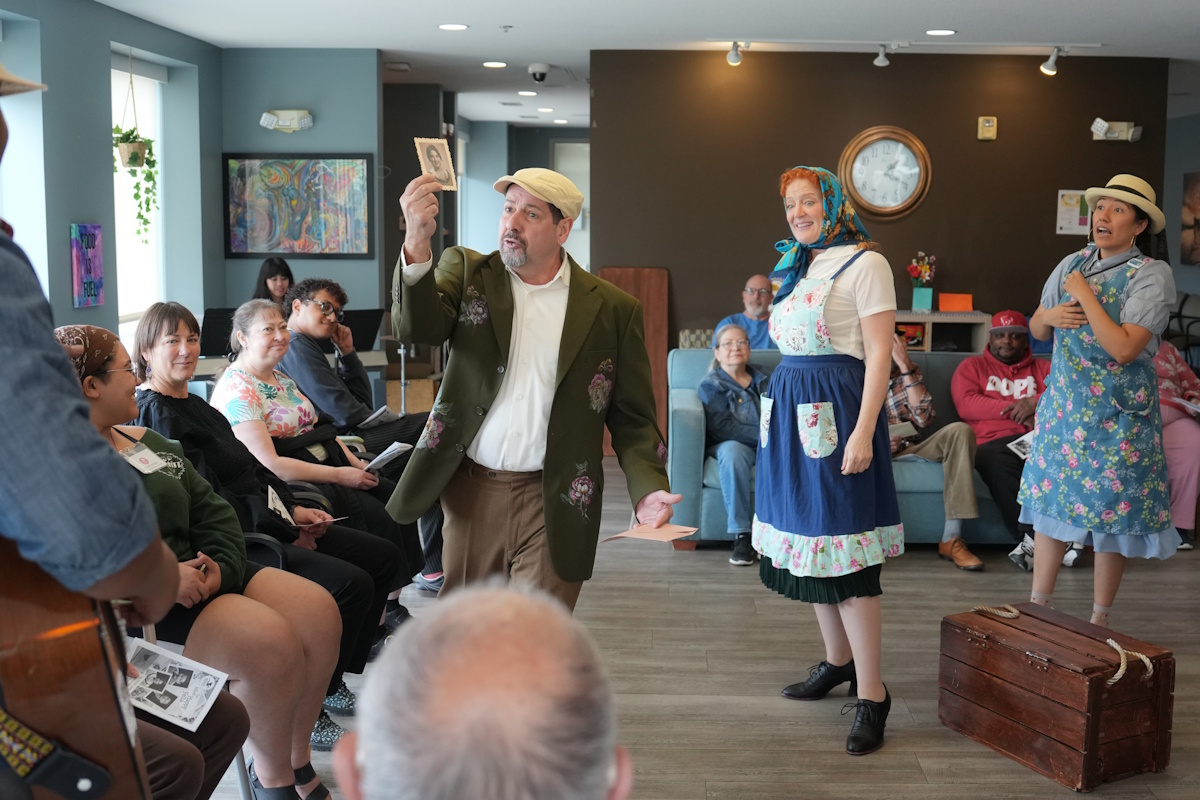
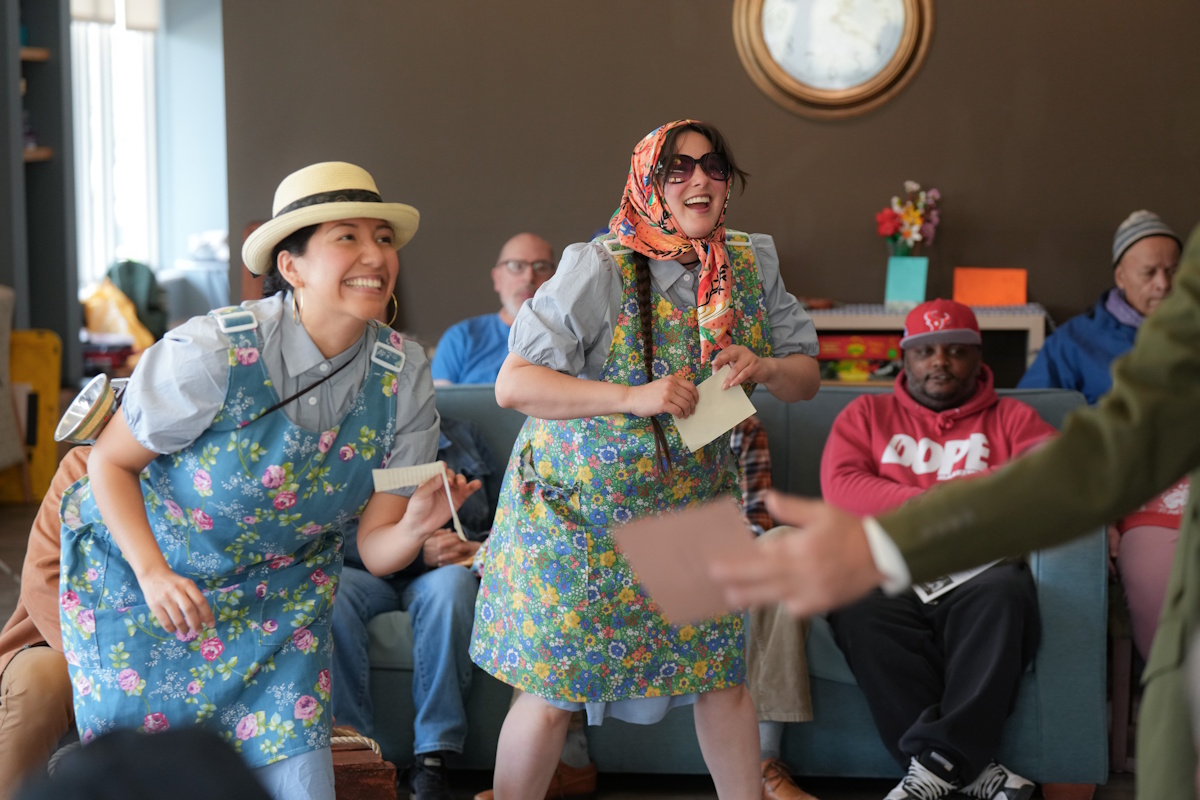
The musical begins in a San Francisco restaurant, where a lonely waitress named “Rosabella” (Suzie Juul) is left jewelry and a note from a charming, older Italian vineyard owner named Tony (Pedro R. Bayón). They begin pen pal romance and he proposes marriage. Tony is deeply smitten but worries Rosabella won’t love him due to his age and appearance. Fearing rejection, he sends her a photograph of his handsome, young foreman Joe (Sasha Andreev). Rosabella accepts the marriage proposal and travels to Napa. When she arrives and discovers the truth, she is crushed and humiliated. Before the situation can be resolved, Tony crashes his truck and is seriously injured. Though angry over the deception and having no good options to return to her former life, Rosabella agrees to go through with the marriage and to care for the recovering Tony. Yearning for a true romantic spark, however, she ends up having a brief affair with Joe. Complicating this triangle is Tony’s lonely sister Marie (Norah Long), who is against the marriage and undermines Tony’s confidence to keep him dependent upon her. Against this serious backdrop, the local community of Herman (Phinehas Bynum), a gentle-natured farm hand, Clem (Maje Adams) and Cleo (Julia Diaz), Rosabella’s smart, tart-tongued friend, provide comic relief and celebration. A secondary theme about Joe’s support for the burgeoning union movement parallels today’s political environment with its criticism of capitalist excesses.
The most happy fella eventually gets a most happy ending. Tony and Rosabella grow to love and accept each other’s mistakes and human frailty. Bayón and Juul portray their characters with a tender, open vulnerability. Andreev’s dreamy old Hollywood baritone makes him the ideal romantic foil. While the musical embodies the values and traditions of the era in which it was written, its themes of longing, love, forgiveness, vulnerability, and the roles of men and women are timeless. If you are looking for a theatrical experience in its purest form, see this musical and any production by this impressively talented troupe.
The Most Happy Fella, based on Sidney Howard’s They Knew What They Wanted, Book, Music and Lyrics by Frank Loesser. Directed by Caitlin Lowans. Music direction by Isabella Dawis, movement by Kyle Weiler, costumes by Sonya Berlovitz, scenic and props design by Eli Sherlock, and dialect coach Isa Condo-Olvera. Tickets are available at www.tenthousandthings.org; suggested price is $40, with pay-as-you-are starting at $15. Remaining shows now through June 7 are at the Capri Theater, 2027 W Broadway, Minneapolis, Thursday, May 28 Friday, May 29 (post-show conversation, ASL-Interpreted) Saturday, May 30 Sunday, May 31; and at 825 Arts, 825 University Ave W, St Paul, Thursday, June 4 Friday, June 5 Saturday, June 6 Sunday, Jun 7.

